

The SAT Abides
Standardized tests are back from the dead. That's probably a good thing.

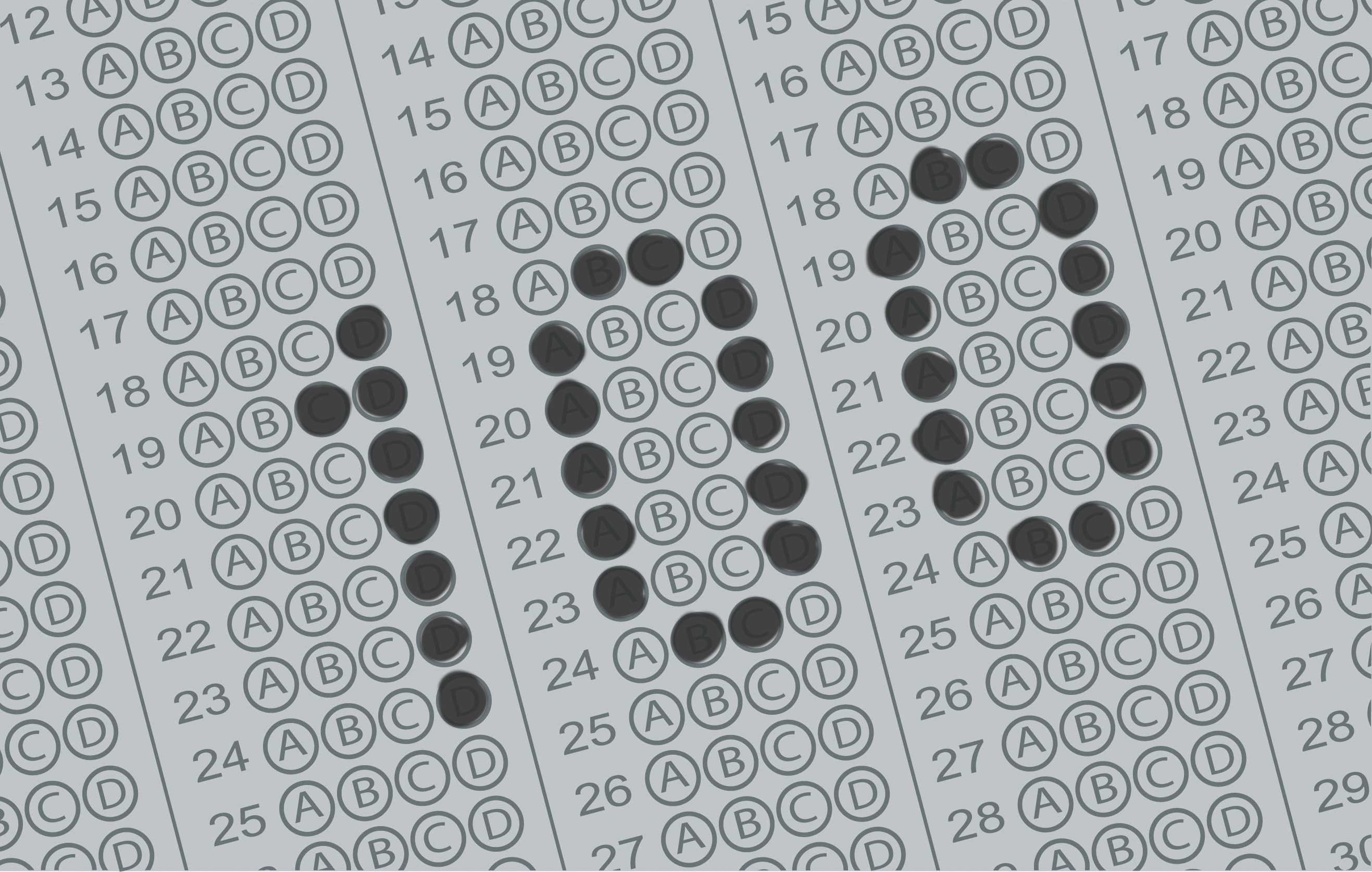
Today is the 100th birthday of the SAT, although, as Jay Vithalani writes in the Chronicle Review, no one’s exactly celebrating. Nevertheless, and despite an uncertain past half decade, the test abides. In 2020, responding both to the exigencies of the Covid pandemic and to longstanding activist pressure, a huge number of colleges made standardized admissions tests — the SAT and the ACT — optional, including all of the Ivies as well as elite peer institutions like MIT and Stanford. By 2022, MIT’s leadership decided a mistake had been made. Its admissions dean acknowledged that the SAT “significantly” predicts mathematics performance, which is especially important at MIT; the test would accordingly be reinstated.
At the time, I anticipated that other elite institutions would follow suit. They have. Earlier this month, Columbia became the last Ivy League institution to reinstate standardized testing. Stanford has similarly returned to testing. And in the University of California system, where the test remains optional, over 1,500 faculty members, largely in math, physics, and other fields demanding robust quantitative skills, have signed an open letter requesting its reinstatement. They’ve now been joined by over 700 professors in the humanities, social sciences, and professional schools.
The reasons are not hard to see. As Vithalani says:
a November 2025 UC San Diego report … states that, between 2020 and 2025, the number of entering freshmen whose math-placement results indicate skills below high-school level grew nearly thirtyfold — from under 1 percent to roughly 12.5 percent of the incoming class; one in 12 is below middle-school standards. And this despite arriving with near-perfect high-school transcripts: Over 25 percent of students placed into the most remedial math course — covering elementary and middle-school arithmetic — had a 4.0 GPA in high-school math.
If it was ever true that, as anti-test activists have often argued, GPA is a better predictor of college performance than the SAT, it is true no longer. Nor can it be seriously claimed that, as critics of the test have long insisted, the SAT is nothing other than a predictor of family income, with which it is positively correlated.
Although it took until 2020 and the prod of a global pandemic to suspend the use of the SAT, skepticism toward it is not new. The sociologists Christopher Jencks and David Riesman addressed the problem incisively in their magisterial The Academic Revolution all the way back in 1968, by which point the positive correlation between social class and score was becoming hard to ignore. Jencks and Riesman dismissed the notion that that correlation somehow rendered the tests invalid as a predictor of academic aptitude: “Those who look askance at testing should not … rest their case on the simple notion that tests are ‘unfair to the poor.’ Life is unfair to the poor. Tests merely measure the results.”
At any rate, non-test admissions criteria might be no less class-linked than the test. That was one conclusion of the 2024 Dartmouth review recommending a return to testing, which observed that some “non-test score inputs … do not predict college performance even though they do advantage more-advantaged applicants at IvyPlus institutions, increasing their admissions chances.” In other words, criteria other than test scores help less capable rich kids get in.
It seems likely that the return to testing heralded by the Ivies and their peers will only become more widespread, not just because the tests work, but because other measures are becoming less reliable than ever. As Nicole Simovski writes, AI means that “personal admissions essays can be produced in seconds”; meanwhile, “grade inflation and student cheating are rampant.” The result: “A sit-down, proctored standardized test to assess a student’s knowledge base in reading, writing, and math might be the only viable option we have right now for selective universities until we can sort out how to teach (and learn) in an era where everything else that goes into an admissions packet has become gameable.”
The degradation of the personal essay as an even semi-reliable signal is a depressing but unavoidable fact of the AI era, and I hope colleges with a strong interest in cultivating humanities students develop some means of selecting talented writers beyond the SAT’s standardized writing assessment. But strong college essays are probably at least as class-linked as strong SAT scores; a 2021 study found that they were even more so. As it stands now, standardized testing looks like both the fairest and the most valid means of selecting students at elite institutions. The Covid period was an experiment, and the results are in.