


When Jill Lepore talked to the Chronicle last year about almost quitting her job over the punishing political environment she saw engulf Harvard around 2014, she expressed a wish for reconciliation and forgiveness: “As a Catholic, I believe in confession and contrition and in making amends.”
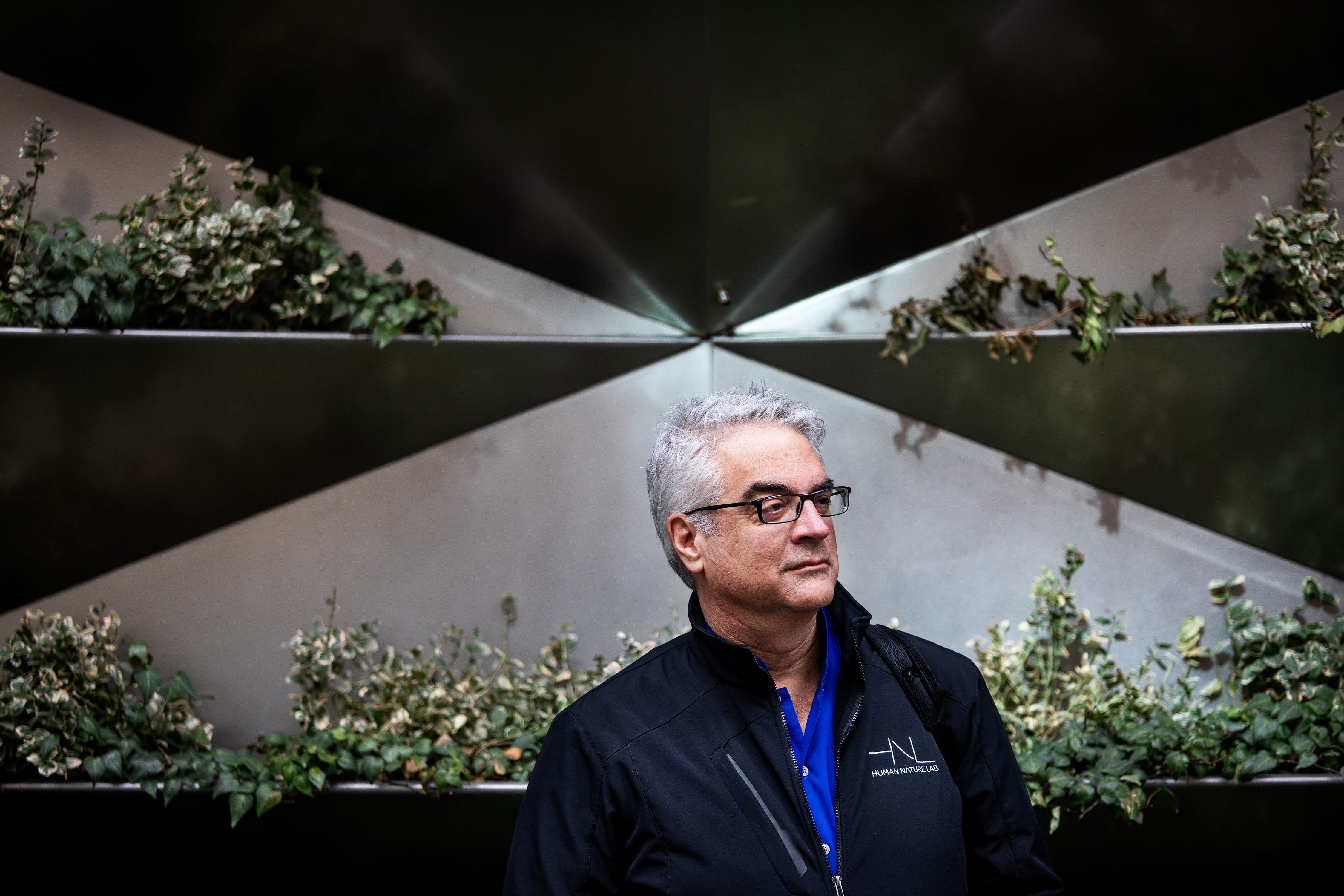
I was reminded of that line while talking to Nicholas Christakis, a professor of sociology at Yale, about his own impression of the political upheavals of the time. Here’s what he said:
You could ask whether, around the country, we should have a kind of truth-and-reconciliation process. A lot of silly things happened over the past 15 years. I know everyone wants to forget it, but we need to have a really honest accounting of how we got here. How did we lose the confidence of the public so badly? It’s not just the Trumpian assault. We were losing public confidence before Trump.
A little over a decade ago, Christakis found himself at the center of the so-called Halloween costume controversy, one of the more ludicrous campus spasms from a period full of them. My colleague Evan Goldstein and I had asked Christakis to talk, among other things, about the recently released report of the Yale Committee on Trust in Higher Education, which explicitly named the Halloween incident (“The very word ‘Halloween’ remains charged around campus. Few episodes have done more to raise public questions about Yale’s commitment to freedom of expression and open, reasoned debate.”)
Christakis speculated about a truth-and-reconciliation process after remarking that, for good tactical reasons, the Yale report “didn’t do as much” as it might have to “excavate how we found ourselves in this pickle.” Except for the mention, resonant but fleeting, of the Halloween affair, the report contains no concrete descriptions of the kind of political and ideological activity that had earned universities like Yale so much skepticism, even hostility.
The notion of such a process is intriguing. The Yale report itself might be taken as an opening move. More reports, at Yale and elsewhere, could follow, each zeroing in on specific areas of tension. The goal would be to prevent the contours of the period’s conflicts from disappearing from institutional history, not in order to punish anyone but in order to lay down appropriate guardrails for the future. Weakened by public mistrust and political assaults, the sector cannot afford the political enthusiasms of 2014-2023 to recur.
What might such reports focus on? A few plausible areas:
Bullying and groupthink
Christakis found himself on the receiving end of a species of corporate vituperation that became incredibly powerful in the period, bolstered by social media and enabled, sometimes tacitly and sometimes actively, by academic administrators. Those administrators countenanced and even encouraged abusive invective by both faculty members and students toward violators of one or another political orthodoxy. I have elsewhere referred to this process as “ritual anathematization.” Rather than memory-holing such incidents, campus leaders now should collect and analyze them, and put in place strong protocols for minimizing the damage they can do. Above all, administrators should be tasked with protecting targeted faculty members and students, rather than with aiding their persecutors.
Mandatory trainings
Relatedly: Many people remember 2014-2023 as an era of endless compulsory indoctrination sessions, often at the behest of diversity, equity, and inclusion administrators. Those offerings, especially the non-optional ones, should be carefully reviewed. Mandatory training materials, whether provided by university staff or by outside contractors, should be collected and analyzed for ideological and political bent, as well as for intrinsic intellectual merit.
Double standards
A careful review of disciplinary actions taken against faculty members for speech-related offenses should be undertaken. Did an institution punish or condemn uncouth or offensive speech that ran athwart campus political orthodoxy more or differently than similar speech that conformed to it? Could being a rude right-winger get you in trouble faster than being a rude left-winger?
Hiring interference
It is well known that administrators in the period, eager to correct for demographic imbalances among faculty ranks, routinely interfered in departmental hiring in order to achieve their preferred vision of diversity. Such interference could be heavy-handed, even coercive. Because much of this activity probably violated civil-rights law, it is unlikely that any committee will be empowered to perform a thorough accounting of the hiring-and-promotion dynamics of the period. But to the extent possible, the mechanisms for achieving faculty diversity should be carefully audited; the social and administrative forces that encouraged inappropriate hiring practices should be inhibited.
Fraudulent academic consensus
On the research end of things, 2014-2023 was remarkable for enabling groups of activists within a discipline to misrepresent their preferred political doctrine as the scientific consensus of their field. One of the most egregious incidents: In 2023, the American Anthropological Association confidently proclaimed that a group of anthropologists interested in the biological reality of sex “relied on assumptions that run contrary to the settled science in our discipline.” This was an authoritarian misrepresentation of the actual state of the field by ideologues within it. Such maneuvers are fatally corrosive to the reputation of the academy; they must be prevented.
What about Trump? What about objections that, given the nihilism and anti-intellectualism of the Trump administration’s campaign against the sector, any reform movement is really covert Trumpism? Or a more temperate objection: Now is not the time to pursue reform, since the real threat, at the moment, comes from the government and the right?
I don’t think any of the authors of the Yale report are Trumpians. But it’s almost certain that, absent the pressure of the Trump administration, the authors of that report would have been left howling in the wilderness, not invited to advise Yale’s president on how to reform the institution. Indeed, Christakis himself had been involved in an effort in 2020 to persuade Yale, whose official mission had grown ever wordier and more encompassing, to return to its earlier focus on knowledge and truth. He was unsuccessful. Last month, under the influence of the trust report, Yale finally took the advice.
I asked Christakis about the Trump problem. Many critics, I noted, especially on the left, will say that the reform movement is necessarily Trumpian, because Trump is its key condition of possibility. I liked his answer:
“My response is Bayard Rustin’s famous saying: ‘If a bigot says to me, “the sun is shining,” if the sun is shining, I say, “Yes, the sun is shining,” because I want to tell the truth.’” A corollary implication: Go through the door while it’s open.
Trump was a result of the insanity of the liberal elites.
If academia manages to reform itself, I would be pleasantly surprised! For every Daniel Diermeier or William Inboden, there are hundreds or thousands of true believers who will never, ever concede an inch.
Some sort of "big stick" or external leverage is almost certainly necessary to force reform on unwilling institutions (e.g. lawmakers using accreditation, funding, or other mechanisms)
There are plenty of individual academics who want reform. Unfortunately, they have little or no influence with the powers that be:
https://unsafescience.substack.com/p/we-tried-to-warn-you